Corridor study, finance district studies, eTOD: Community Planning projects kick off throughout the region
March 29, 2024
March 29, 2024
This spring, four projects have kicked off that will make communities throughout the Chicago region more transit-friendly, thanks to support from the RTA Community Planning program. This program provides funding and technical assistance to local governments to help foster growth of sustainable, equitable, walkable, and transit-friendly communities. Since 1998, more than 200 projects have been completed.
The Village of Sauk Village is working with RTA on a corridor study of a roughly three-mile corridor along Sauk Trail and Torrence Avenue in order to enhance pedestrian, bicycle, and transit accessibility and improve transportation safety for all users. The study area is a half-mile buffer area that follows Pace bus route 358 within Sauk Village between Cottage Grove Avenue and US-30 (Lincoln Highway). This route currently operates using “flag stops”— where riders can get on or off the bus anywhere along the route and do not have to be dropped off or picked up at posted stop locations—but will be converted to posted stop service.
The corridor study will help the Village identify and implement strategies and projects that improve transportation infrastructure by:
The project will engage the community to solicit feedback from residents, business owners, and other stakeholders through a variety of formal and pop-up events. The project kicked off in January and the first Steering Committee meeting was held in March. The consultant team is currently conducting existing conditions analysis and working to finalize the public engagement plan for the study.
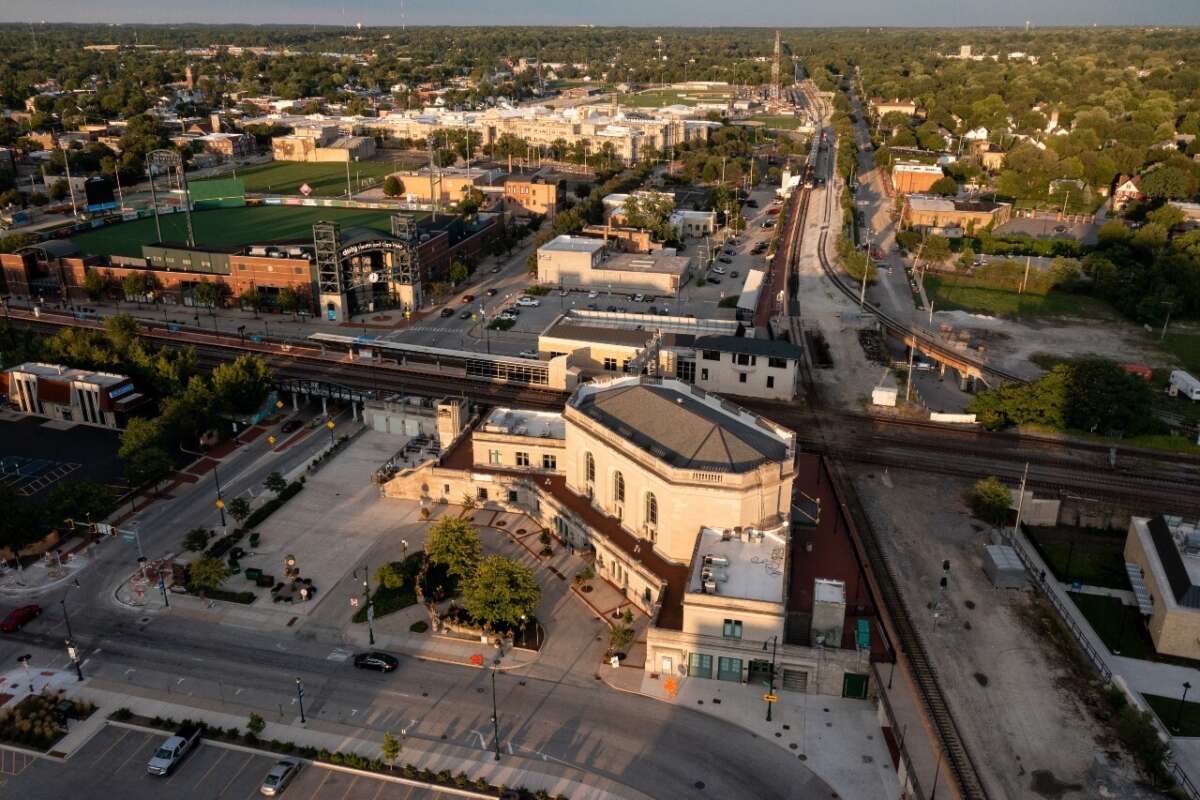
The City of Joliet is partnering with the RTA to complete an equitable transit-oriented development (eTOD) plan for the area downtown near the Joliet Gateway Center Metra station and Pace Transit Center. Elements that make this plan equity-focused include intentional outreach to residents of all socioeconomic and racial backgrounds to ensure broad community input, engagement stipends to compensate residents for their time, incorporating anti-displacement measures in the plan, and protection and expansion of a diverse range of housing options to ensure there is housing availability for people of all means.
The final plan will include a land use framework that will designate the land use, character, and development intensity for the study area and key redevelopment parcels; an urban design framework that will recommend improvements to enhance the pedestrian experience and create engaging public spaces; a multimodal transportation framework that will prioritize universal accessibility, increased pedestrian safety, and expanded bicycle infrastructure; and more.
Input will be gathered from the community with online tools and in-person engagement opportunities like individual interviews, small focus groups, a community workshop, and an online questionnaire. Additionally, a half-day developer panel with the Urban Land Institute of Chicago on-site in the study area will offer perspectives from development professionals and give local staff the opportunity to discuss development potential and strategies.
A steering committee kick-off meeting was held in March in Joliet, and that committee will play a key role throughout plan development. The team is now working on the first deliverable, the existing conditions report.
RTA and the City of Geneva will work together to comprehensively evaluate the existing special service area (SSA) No. 1 and explore accompanying financing districts to enhance the downtown commercial environment and provide the City with additional financing mechanisms to make further civic investments. The district(s)’ purpose is to generate funds to implement the City of Geneva’s strategic plan and downtown/station-area plan.
Two focus groups will be held during the project, and broader input will be obtained from residents and the business community through surveys, outreach materials, and the City’s website. Based on this community engagement and evaluation of the existing SSA, the team will develop a recommended financing strategy for the future, along with an implementation guide that details responsible parties, timing, financing considerations, and an equity lens for implementation.
An initiation meeting with City of Geneva staff was held in March and the project team is now focused on collecting and analyzing data.
The Village of University Park is partnering with the RTA for exploration and assessment of potential special financing tools and strategies the Village can use to effectively implement recommendations outlined in the recently adopted transit-oriented development (TOD) plan.
The study will evaluate the costs of preparing the identified site for the development envisioned in the TOD plan, including site acquisition, utility improvements, road and pedestrian infrastructure improvements and any other necessary measures. Potential municipal revenues from the build out of the TOD site will then be analyzed and included in the fiscal impact analysis. The plan report will include an implementation guide Village staff will then use as a roadmap for making the community vision a reality.
Individual stakeholder interviews and two separate focus groups will be held to gather community input throughout the plan process. Broader input from residents will be obtained via the Village’s website. Based on this feedback and a current conditions study, a menu of potential financing tools and development incentives will be assembled to aid the Village in financing infrastructure improvements and attracting potential developers to the TOD site.
The project kickoff meeting was held in March, and the first steering committee meeting is scheduled for April in University Park.
Learn more about the RTA’s Community Planning program.
Subscribe to our Newsletter
Related Articles
 RTA to host Suburban Transit Summit to gather feedback and build support for improving service with new funding
To gather feedback and build support for improving transit service with new, expanded funding, the RTA is hosting a half-day Suburban Transit Summit in Arlin...
October 21, 2024 RTA Citizens Advisory Board: Get to know Karl Gieseke
Following through on a key recommendation from regional transit strategic plan Transit is the Answer, the RTA launched a newly expanded, rider-focused Citize...
October 15, 2024 Why Illinois legislators must reach a transit funding solution by spring 2025—and what happens if they don’t
Chicago’s regional transit system is facing a projected operating shortfall of more than $730 million annually—or nearly 20% of the regional operating budget...
October 9, 2024 CTA presents on Red Line Extension, Pace discusses network revitalization plan during presentations to RTA Board
CTA President Dorval Carter and Pace Executive Director Melinda Metzger presented midyear updates to the RTA Board of Directors during their meeting on Septe...
October 3, 2024 Transit Station Activations in Rogers Park, Woodlawn bring live music, pop-up plant-based festival for riders to enjoy
In May, the RTA announced more than $120,000 in funding for eight Transit Station Activation projects near CTA, Metra, and Pace stations and stops. The proje...
October 3, 2024 Illinois should learn from past transit funding crises and achieve sustainable funding
Public transit operations in the Chicago region have been chronically underfunded—particularly at the state level. Today, state funding makes up only 17% of ...
October 1, 2024