Accelerating the transition to a zero-emission regional transit system
April 20, 2023
April 20, 2023
This post is one in a series exploring the Agenda for Action and Advocacy in Transit is the Answer, the RTA’s new regional transit strategic plan. Together with our partners, working toward the items on this list will move us closer to the plan’s vision of a public transportation system that is safe, reliable, and accessible that connects people to opportunity, advances equity, and combats climate change.
Increased attention on the climate crisis and air quality issues have led to more scrutiny of transportation emissions in the Chicago region, throughout the United States, and across the world in recent years. And while reducing emissions will benefit all Chicagoland residents, it’s important to note the impacts of air pollution from cars, trucks, and other sources are not distributed evenly across our region. People of color and populations experiencing low incomes are disproportionately exposed to higher levels of dangerous air pollution and suffer negative health outcomes as a result.
Transit plays an instrumental role in advancing sustainability by reducing driving. While RTA analysis shows that emissions from transit vehicles make up less than 2% of total transportation emissions in the region, transit operators can cement their place as the anchors of a more sustainable network by electrifying.
During the development of Transit is the Answer, working groups comprising more than 100 riders, advocates, agency staff, and stakeholders expressed that accelerating the transition to a zero-emission regional transit system was a priority. While the past several years have seen increased urgency in electrification of bus fleets, working groups pushed for an even faster pace and improved coordination in adoption of green transit technologies including a target of eliminating all fossil fuel transit and fleet vehicles by 2040. Working groups also envisioned improved planning efforts to fortify the regional network against climate and other disruptions including infrastructure emergencies and labor shortages. Lastly, working groups recommended establishing a funding or incentive program for the Service Boards and local communities to implement green infrastructure solutions in areas near transit.
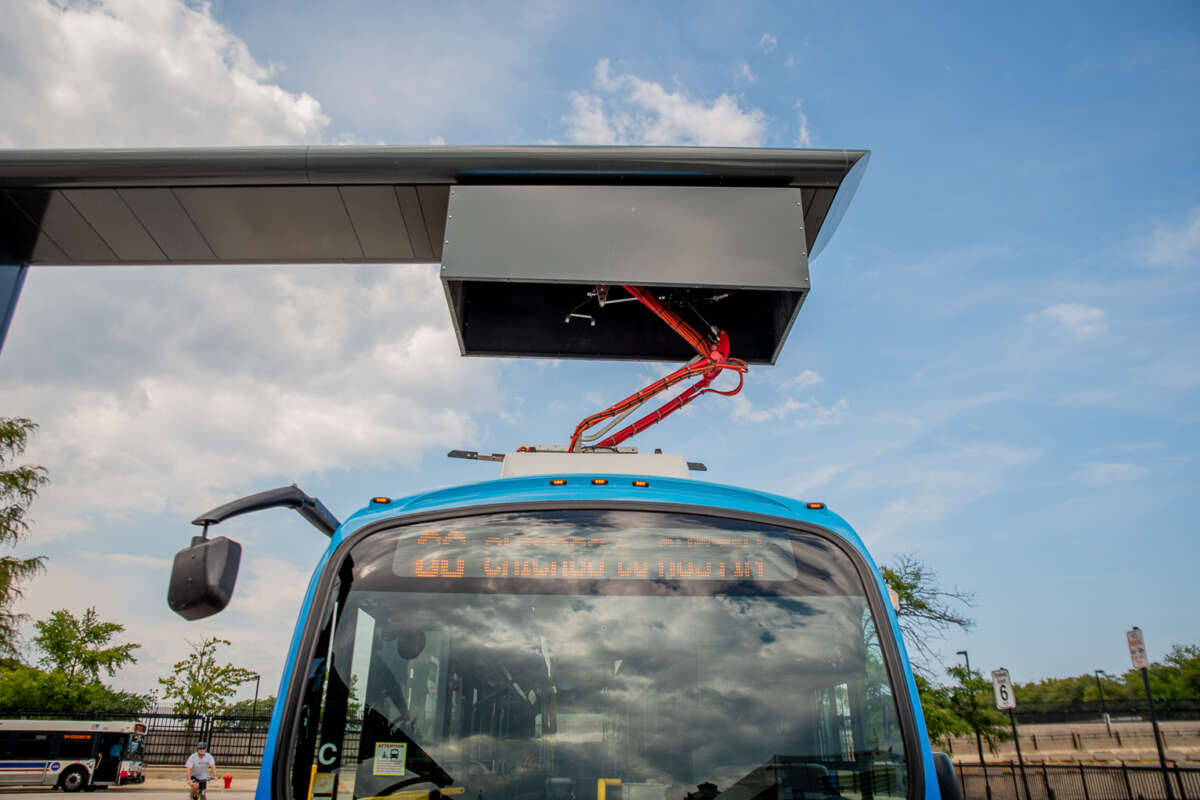
The CTA, Metra, and Pace have been on a path to zero emissions for some years. The CTA released their Charging Forward plan in 2022 to inform the major decisions that comprise CTA’s plan to fully electrify its bus fleet by 2040, including assessing equity and environmental justice impacts. Metra announced in 2022 that it plans to convert six locomotives to battery electric, demonstrating a commitment to innovation and cleaner energy. As part of their Driving Innovation plan, Pace committed to a goal in 2022 of a 100% zero emissions fleet by 2040 to reduce its carbon footprint and improve the quality of the community’s environment. Pace also purchased 20 Proterra ZX5 Electric Buses and EV Fleet Charging Infrastructure last year, and the agency’s 2023 Capital Program includes an additional $60 million for electrification and expansion of North Division in Waukegan.
Transit is the Answer calls on the RTA, CTA, Metra, and Pace to work together to develop a regional transit climate action plan that builds upon existing Service Board plans and identifies opportunities for transit to support the region’s climate action goals, outlines regional strategies that will encourage more people to ride transit, and charts a course to reduce the footprint of the transit system and move toward zero-emissions for transit operations. The RTA will lead the development of this plan and will work to grow regional transit mode share by continuing to expand the use of Transit Benefit programs across the region.
The CTA will continue to implement recommendations in Charging Forward, advance electric bus deployment on the #66 Chicago Avenue route with additional electric buses and charging capacity, continue an electrical load study to determine increased power requirements and electrical infrastructure needs for charging at bus garages, and pursue additional funding for planning, design, and implementation of bus facilities improvements necessary to support charging infrastructure, electric bus operations, and electric bus maintenance.
Metra will procure zero emission train sets of integrated locomotive and powered cars for shorter distance operations and will procure Tier 4 and fully electric switch locomotives.
Pace will complete its electric vehicle transition plan, continue procurement and delivery of electric vehicles for service testing, and begin converting their North Division garage in Waukegan to an electrified facility.
CMAP will accelerate their greenhouse gas planning efforts and offer opportunities for transit electrification through the funding programs they administer.
With more resources, the CTA, Metra, and Pace could transition their fleets more quickly and more thoroughly. Replacing CTA’s fleet of 1,800 diesel buses with electric buses by 2040 requires an estimated increase in capital funding of $1.8 to $3.1 billion over what would be needed to maintain the existing fleet and facilities to pay for the additional per vehicle purchase cost and the required charging and electrical infrastructure. In addition, more resources would allow for other updates to be made to make transit stations and facilities more energy efficient. Finally, more resources would also allow the agencies to improve the physical resiliency of the systems to buffer the effects of climate change. Join our Transit is the Answer Coalition to learn more and take action with us.
Subscribe to our Newsletter
Related Articles
 Transit station activation in Uptown brings positive presence to Broadway bus route with weekly outdoor yoga class
On Friday mornings now through the end of the year, CTA #36 and #81 bus riders and Red Line passengers through the Uptown neighborhood of Chicago may catch a...
July 25, 2024 Join the RTA Transit is the Answer Coalition to discuss possible reforms to improve service and accountability for riders
Following the introduction of legislation that proposes changes to how the Chicago region’s transit agencies are organized, the RTA continues to lead convers...
July 15, 2024 RTA releases new fare equity report, recommending fully funding and expanding reduced fare programs
A new report released by the RTA in July, Building a More Equitable Fare Structure for Public Transit in the Chicago Region, recommends that the state legisl...
July 11, 2024 Homewood, Richton Park adopt transit-oriented development plans funded through RTA Community Planning program
This spring, transit-oriented development (TOD) plans were adopted by the villages of Homewood and Richton Park that will make these communities more transit...
July 11, 2024 Good news: Regional transit ridership reaches new high as CTA, Metra, and Pace increase service, offer new fare products
Ridership across Chicago’s transit system has continued to increase, with May 2024 seeing the highest ridership levels since 2019 for CTA, Metra, and Pace. T...
June 28, 2024 Legislative Update: Lawmakers pass state budget, action on transit funding still needed ahead of fiscal cliff
The Illinois General Assembly adjourned this year’s spring legislative session after passing an overall $53.1 billion budget for State Fiscal Year (SFY) 2025...
June 27, 2024