Making Chicago’s transit system accessible for all
April 17, 2023
April 17, 2023
This post is one in a series exploring the Agenda for Action and Advocacy in Transit is the Answer, the RTA’s new regional transit strategic plan. Together with our partners, working toward the items on this list will move us closer to the plan’s vision of a public transportation system that is safe, reliable, and accessible that connects people to opportunity, advances equity and combats climate change.
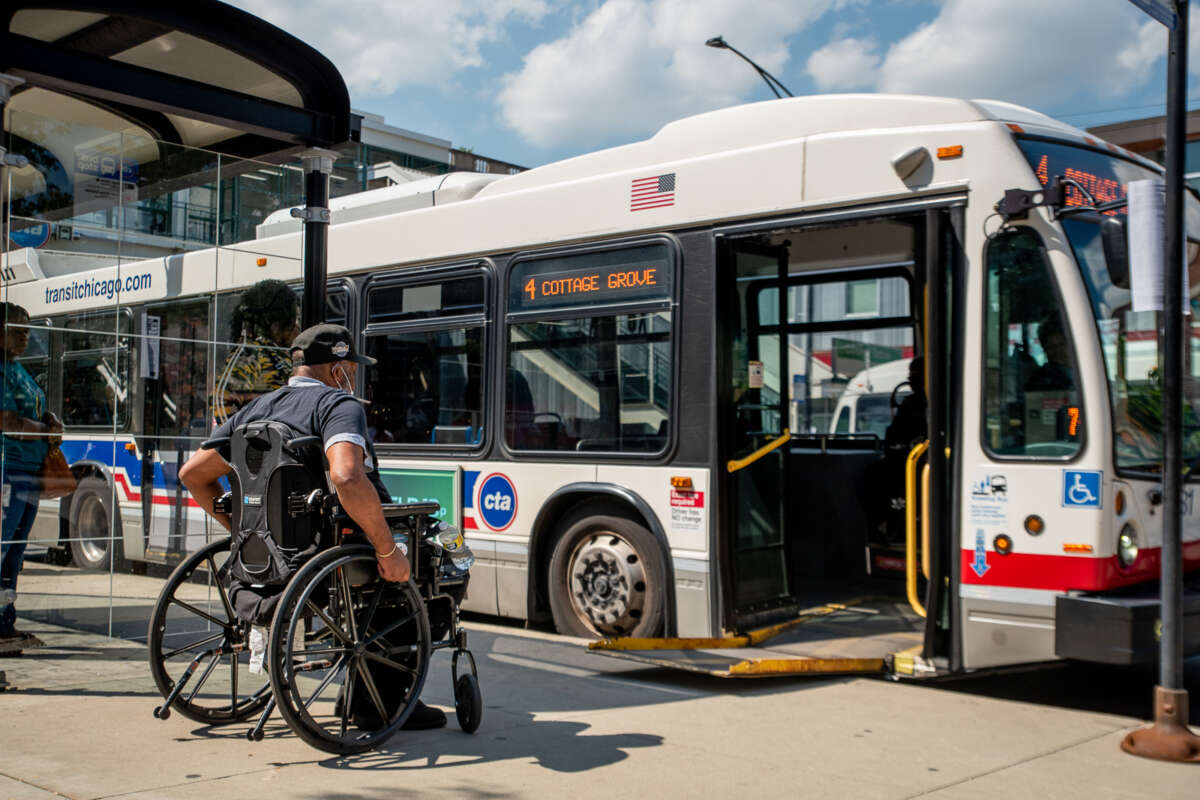
The RTA is committed to helping build a transit system that is accessible for all riders. While all Pace and CTA vehicles are fully accessible and all Metra trains include at least one accessible train car, many rail stations lack elevators and other essential features. The Service Boards are making progress in updating station facilities and other elements of the system every year to reach the region’s goal of 100 percent accessibility.
Every time investments are made in projects like station elevators and ramps, the system gets closer to the goal of universal mobility. This concept recognizes that the benefits from accessibility improvements flow to all users, not just those with disabilities. Removing barriers for people with disabilities improves the transit experience for all. For instance, adding accessibility features makes it easier for families with strollers or grocery carts to use transit along with those in wheelchairs. Currently, approximately 76 percent of stations on the Metra system and 70 percent of stations on the CTA rail system are fully accessible. More funding and service innovations are needed to remove barriers and improve the transit experience for everyone. Recent projects advancing these goals include:
Transit is the Answer renews the RTA and Service Boards’ commitment to a transit system that works better for everyone through its Action Agenda. Stakeholder working groups recommended establishing a dedicated funding source for capital projects addressing ADA improvements. In the near term, the RTA will lead the development of a regional accessibility improvements plan that builds on existing Service Board plans. This new comprehensive plan will provide a full catalog of capital projects that prioritize investment and identify funding sources to achieve full system accessibility.
Integrating accessibility considerations into regular planning processes can be just as important as dedicated programs and funding. During development of the strategic plan, stakeholders and the public had opportunities to weigh in on the capital priorities for the region. The Priority Projects Technical Working Group, made up of experts from CTA, Metra, Pace, and the Chicago Metropolitan Agency for Planning (CMAP), considered this input and identified 12 new themes for evaluating capital projects as they are added to the regional program in future budgeting processes. Accessibility for people with disabilities was included as one of the agreed upon evaluation themes, and performance metrics will be developed to ensure that accessibility is prioritized in the capital program moving forward.
With more resources, the agencies could advance accessibility improvements more quickly. Local municipalities would also benefit from additional regional, state, and federal funding to help them invest in accessible sidewalks, crosswalks, and other infrastructure improvements around their stations, which was a key recommendation of the strategic plan’s working groups. CMAP has launched a program dedicated to advancing ADA transition planning with local municipalities to help them achieve compliance and ensure that public facilities are accessible to all. Linking accessible communities with accessible transit maximizes its value and ensures that people with disabilities have equal access to the opportunities transit provides.
Transit is the Answer’s successful development is due in no small part to the broad coalition of stakeholders who contributed to it. To implement the plan and achieve its goals, we need to continue to engage all those who have a stake in the transit system’s future. Please join our coalition to learn more about how transit is the answer to our region’s accessibility challenges.
Subscribe to our Newsletter
Related Articles
 Transit station activation in Uptown brings positive presence to Broadway bus route with weekly outdoor yoga class
On Friday mornings now through the end of the year, CTA #36 and #81 bus riders and Red Line passengers through the Uptown neighborhood of Chicago may catch a...
July 25, 2024 Join the RTA Transit is the Answer Coalition to discuss possible reforms to improve service and accountability for riders
Following the introduction of legislation that proposes changes to how the Chicago region’s transit agencies are organized, the RTA continues to lead convers...
July 15, 2024 RTA releases new fare equity report, recommending fully funding and expanding reduced fare programs
A new report released by the RTA in July, Building a More Equitable Fare Structure for Public Transit in the Chicago Region, recommends that the state legisl...
July 11, 2024 Homewood, Richton Park adopt transit-oriented development plans funded through RTA Community Planning program
This spring, transit-oriented development (TOD) plans were adopted by the villages of Homewood and Richton Park that will make these communities more transit...
July 11, 2024 Good news: Regional transit ridership reaches new high as CTA, Metra, and Pace increase service, offer new fare products
Ridership across Chicago’s transit system has continued to increase, with May 2024 seeing the highest ridership levels since 2019 for CTA, Metra, and Pace. T...
June 28, 2024 Legislative Update: Lawmakers pass state budget, action on transit funding still needed ahead of fiscal cliff
The Illinois General Assembly adjourned this year’s spring legislative session after passing an overall $53.1 billion budget for State Fiscal Year (SFY) 2025...
June 27, 2024