Bus rapid transit could be transformative for Chicago area transit
March 21, 2023
March 21, 2023
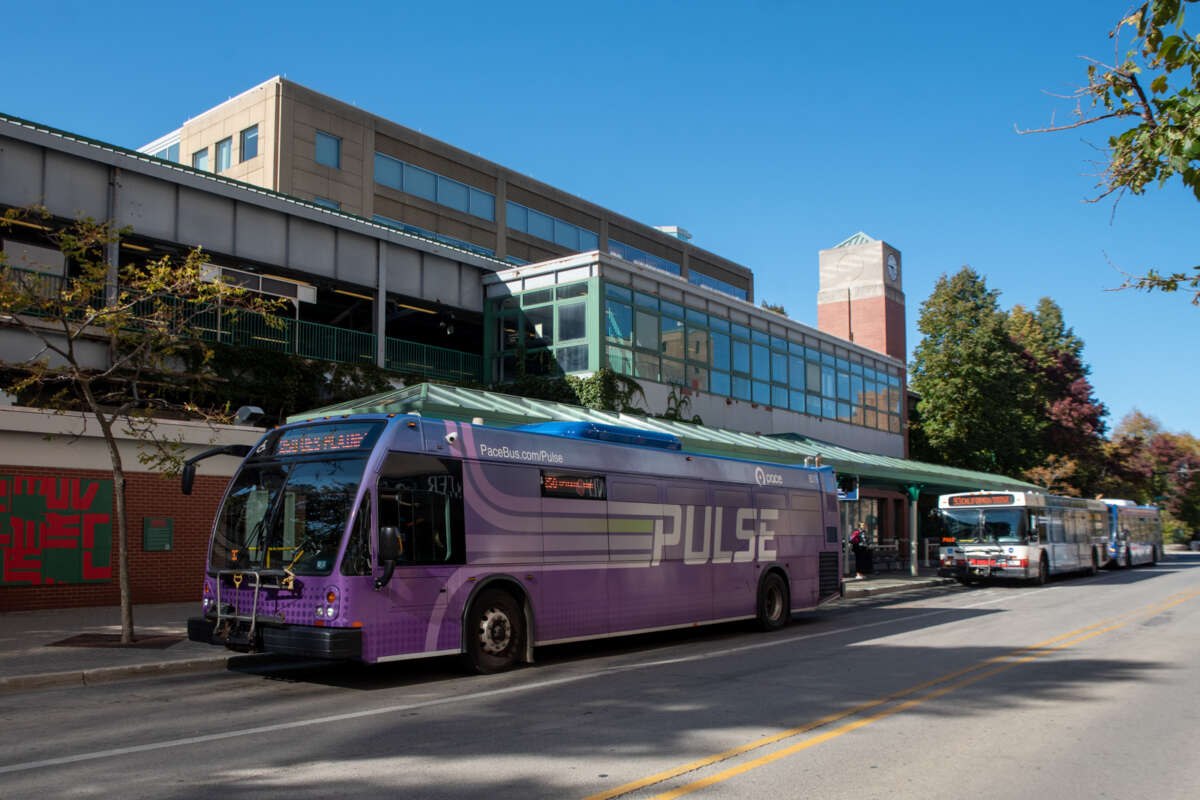
Every day hundreds of thousands of residents rely on CTA and Pace buses to get them where they need to go. They connect the spokes in Chicago’s hub-and-spoke transit network and serve people in neighborhoods lacking access to CTA and Metra trains. They are fully accessible for people with disabilities. All this while taking up a fraction of the space per person on the street when compared to cars. As highlighted in RTA’s newly adopted Transit is the Answer strategic plan, our region’s bus network could have an even greater impact if buses were given more priority on roadways.
Bus ridership was declining before the pandemic started, and speed and reliability issues persist today. Congestion has slowed service while ride-hailing has emerged as a competitive option, for those who can afford it. More attention and investment in bus service from both inside and outside transit agencies is needed to reverse these trends and maximize the positive impact of the bus.
Bus rapid transit (BRT) is fast, reliable bus service featuring dedicated lanes, bus-priority traffic signals, and enhanced stations. It’s more affordable and less disruptive than building new rail lines, allowing growth of a BRT network and stations to advance much more quickly. Dedicated bus lanes can help free buses from congestion while making streets safer for all users by slowing cars to safe speeds through the narrowing or eliminating of general-purpose lanes.
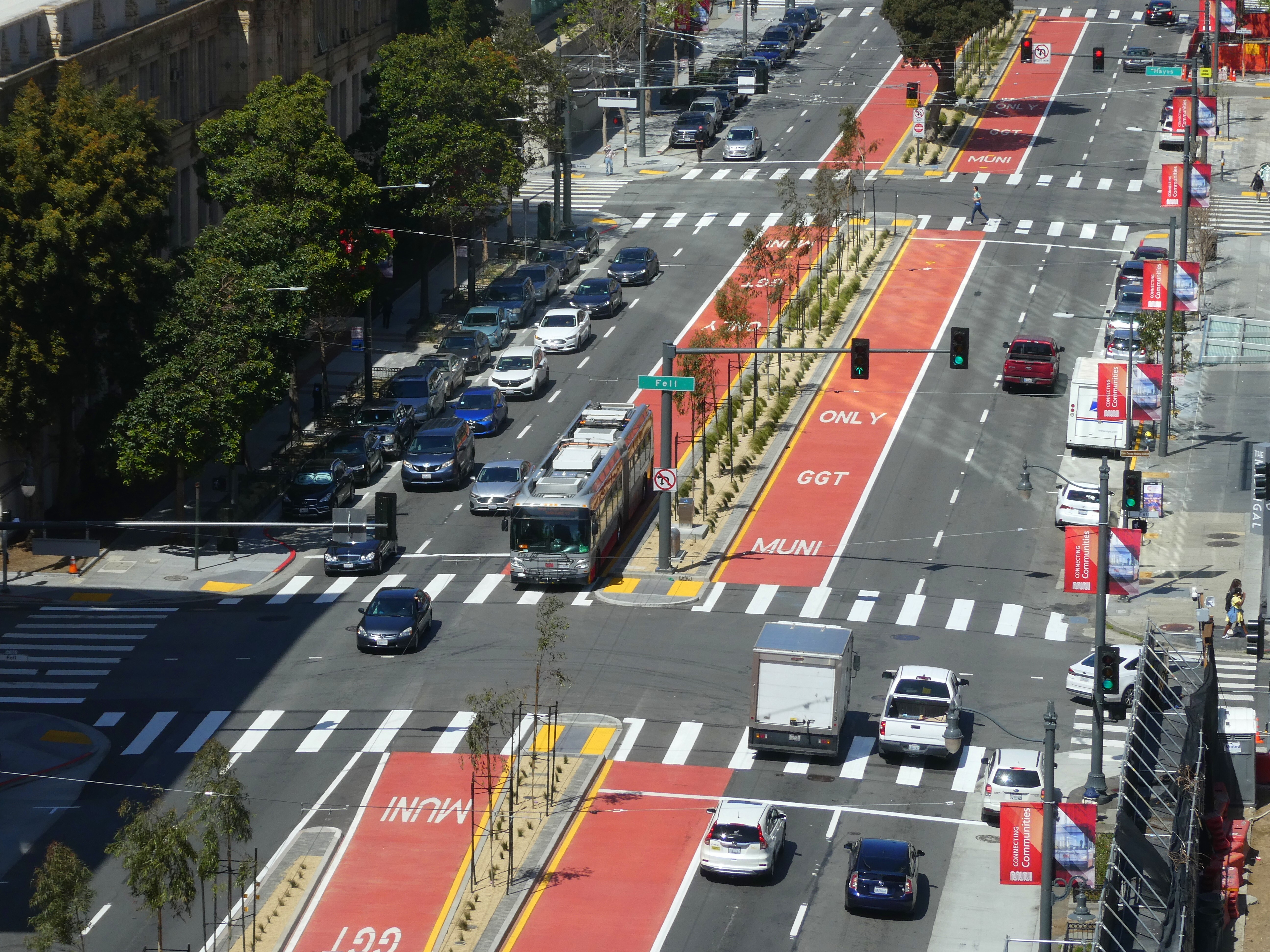
BRT projects around the U.S. have led to significant improvements in travel times, with some of the most effective projects cutting travel times in half for riders. In 2022, San Francisco launched Van Ness BRT service, cutting travel times by 35 percent and growing ridership at a faster rate than any bus or rail line in the system. In the Minneapolis-St. Paul metro area, Metro Transit currently operates five successful BRT lines that boosted ridership by as much as 33 percent, with plans for three additional lines by 2025, three more by 2030, and an additional seven by 2040.
Compared with peer regions, the Chicago region dedicates very little roadway space for public transit. Transit agencies serving cities like Los Angeles, Seattle, Miami, Minneapolis, Houston, and Phoenix all have over 100 miles of transit-only or transit-priority roadway lanes. Chicago has less than 15 lane miles in this category, not including bus-on-shoulder corridors on regional expressways.
Fortunately, the region’s transit agencies are advocating for transit-priority roadway designs through efforts like CTA’s Better Streets for Buses in partnership with Chicago Department of Transportation (CDOT) and Pace’s Rapid Transit Program, which includes the Pulse and Bus-on Shoulder express bus programs. But this is not something transit agencies can fix on their own. Local and state transportation departments control the streets and have the final say in roadway design. Our region needs to work collectively to accelerate and fund bus priority projects to catch up with peer regions.
The vision of Transit is the Answer, the RTA’s newly adopted strategic plan for the regional transit system, is safe, reliable, accessible public transportation that connects people to opportunity, advances equity, and combats climate change. Partnering with roadway agencies to build more transit-friendly streets and advance bus rapid transit is one of seven key items on the plan’s advocacy agenda.
While CTA and Pace continue to move their bus priority initiatives forward in partnership with roadway agencies, RTA will work to boost them by funding and supporting more corridor planning projects on busy bus routes in the city and suburbs. We will continue to advance regional transit-signal priority planning and make funding available for transportation agencies to hire staff and consultants needed to get more projects on the street.
At the regional level, we will advocate for the Illinois Department of Transportation (IDOT), CDOT, county DOTs, and other local government agencies to champion bus projects and dedicate more street space to high-quality bus service.
This coordination is timely given the region’s potential to secure federal funding to build BRT networks over the next few years. The Infrastructure Investment and Jobs Act includes several new and expanded discretionary grant programs where BRT projects qualify for funding. BRT aligns well with the Biden Administration’s focus on advancing racial equity and combating climate change with its transportation investments. Regions like Indianapolis and Seattle are already taking advantage. Chicago could be next.
You can help by joining RTA’s Transit is the Answer Coalition. The group of riders, advocates, and representatives from the CTA, Metra, Pace, and other government agencies will meet quarterly to pursue strategies for strengthening the transit system and making it more useful for all residents – including advancing BRT. Individuals and organizations are welcome to join and can sign up now to receive updates.
Subscribe to our Newsletter
Related Articles
 Transit station activation in Uptown brings positive presence to Broadway bus route with weekly outdoor yoga class
On Friday mornings now through the end of the year, CTA #36 and #81 bus riders and Red Line passengers through the Uptown neighborhood of Chicago may catch a...
July 25, 2024 Join the RTA Transit is the Answer Coalition to discuss possible reforms to improve service and accountability for riders
Following the introduction of legislation that proposes changes to how the Chicago region’s transit agencies are organized, the RTA continues to lead convers...
July 15, 2024 RTA releases new fare equity report, recommending fully funding and expanding reduced fare programs
A new report released by the RTA in July, Building a More Equitable Fare Structure for Public Transit in the Chicago Region, recommends that the state legisl...
July 11, 2024 Homewood, Richton Park adopt transit-oriented development plans funded through RTA Community Planning program
This spring, transit-oriented development (TOD) plans were adopted by the villages of Homewood and Richton Park that will make these communities more transit...
July 11, 2024 Good news: Regional transit ridership reaches new high as CTA, Metra, and Pace increase service, offer new fare products
Ridership across Chicago’s transit system has continued to increase, with May 2024 seeing the highest ridership levels since 2019 for CTA, Metra, and Pace. T...
June 28, 2024 Legislative Update: Lawmakers pass state budget, action on transit funding still needed ahead of fiscal cliff
The Illinois General Assembly adjourned this year’s spring legislative session after passing an overall $53.1 billion budget for State Fiscal Year (SFY) 2025...
June 27, 2024