Transportation Tuesday Recap: The Future of the Curb – How Curb Management Strategies are Changing and Who's Leading the Charge
June 24, 2022
June 24, 2022
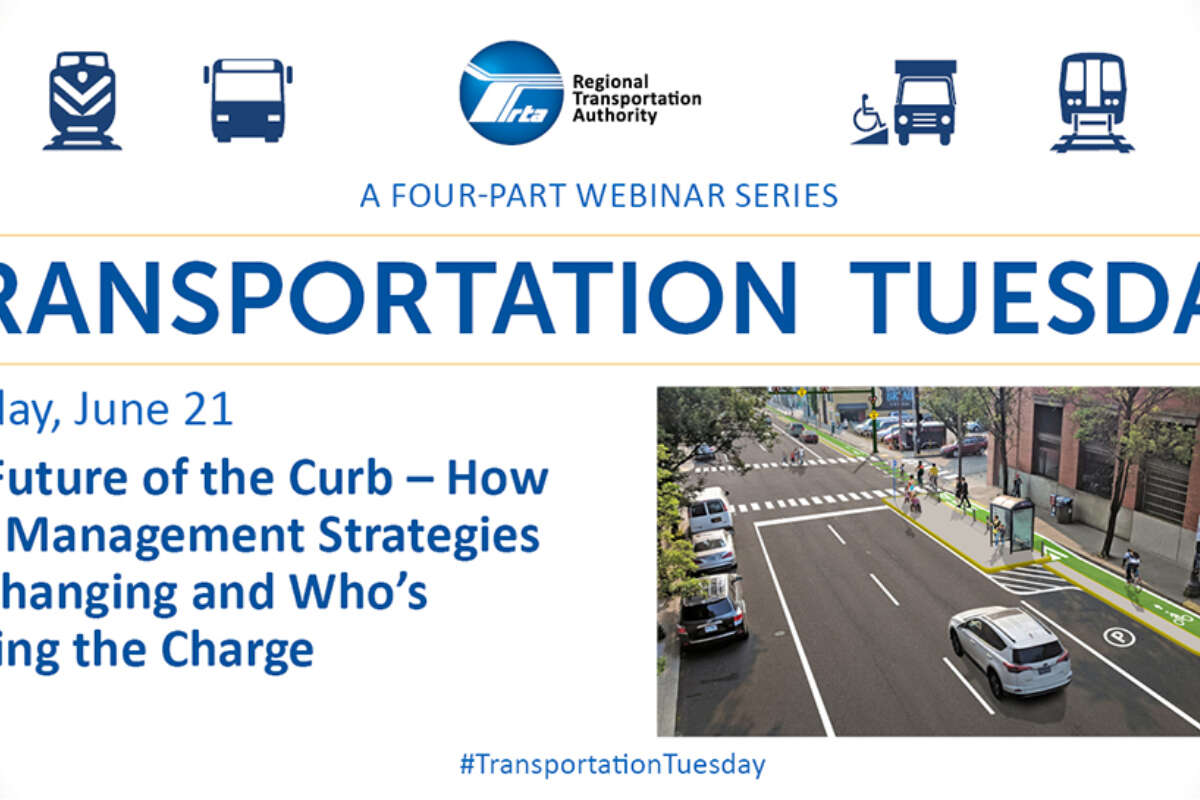
Curb planning in cities is a historical challenge, further exacerbated by the COVID-19 pandemic as transportation and economic habits have evolved. Curbside management is a critical tool for cities in reducing congestion and maximizing mobility, safety, and the equitable use of public space. The RTA, alongside the City of Chicago, is developing its first Curb Management and Mobility Plan in the Kimball Brown Line station area to address shared mobility problems as the built environment continues to change during the ongoing pandemic.
In the penultimate webinar of the RTA's four-part Transportation Tuesday Series, a panel featuring representatives from the City of Chicago Department of Planning and Development, transportation entities in Seattle, and an industry expert discussed the challenges and opportunities experienced through the curb management planning process. Moderated by RTA senior analyst Robert Morris, the panel explored what good curb planning entails.
The webinar began with a series of presentations from the panelists highlighting the value of curbs and their wide range of users in cities. Chrissy Mancini Nichols, National Director for Curb Management and Mobility at Walker Consultants, explained that the growing competition for curbspace brought on by the COVID-19 pandemic challenged the use of private vehicle parking spaces for a sole purpose.
"With the pandemic, we saw cities take this fast action on something that has been extremely difficult to change over the years: these long-held beliefs on parking policies that you just cannot move a private vehicle parking space to something else that has more value and more for the community," Nichols said.
Nichols noted that the popularity of rideshare services such as Uber and Lyft, e-scooters, and increased use of delivery services dependent on sufficient curb space precipitated the need for effective curb management.
Mary Catherine Snyder, Parking Strategist for the Seattle Department of Transportation’s Curbside Management team, and Pierce Canser, Parking and Mobility Hubs Team Lead for King County Metro, agreed with Nichols, noting that in Seattle, curb management and planning focuses on prioritizing critical access curb needs beyond parking.
“One of the big efforts that we have is not so much about parking needs but the curb needs—looking at how do we prioritize the critical needs that businesses and residents have, not just package delivery, but also good and services like solid waste,” Snyder said. “How do trash and recycling get picked up on a regular basis? Other things like building services: How does a plumber get access to a building? Or passenger pickup or drop-off—these could include disabled parking zones.”
In addition to the curb needs discussed by Snyder, Canser discussed other curbside priorities specific to transit. In Seattle, these include bus stops and layovers, pickup/drop-off zones, and looking at curbs' transit advantages. However, successfully incorporating these priorities into curb planning is often limited by budgets, spatial constraints, and poor bus lane enforcement.
“In Seattle, we have very limited space for buses to end their routes and layover,” Canser said. “It becomes challenging to figure out some of the route planning dynamics; we are starting to move into a place where we develop some off-street layover options. We also have issues with bus lanes, making sure folks are adhering to the signs, and we finally got some legislation in Washington state to pilot some enforcement of bus lanes.”
Carmen Martinez with the City of Chicago Department of Planning and Development also provided insight into curb planning in a densely populated city.
Martinez’s presentation focused specifically on curb management on the northwest side of Chicago. The conversation revolved around the Kimball Station Curb Management and Mobility Plan, which was awarded $100,000 from the RTA Community Planning Program. The goal of the plan, which is currently in procurement, is to provide recommendations for improving mobility, access to transit, and transit rider and pedestrian experiences.
"The purpose of this plan is to identify how we can enhance accessibility, connections, transit and improving the pedestrian realm around the Kimball station," Martinez said.
After the panelists presented, a discussion and Q&A wrapped up the event. Panelists weighed in on challenges associated with curb management—both longtime challenges and those that arose with COVID-19. Some of these include the politics of converting parking spaces to other uses, determining whether citations or incentives are more effective at ensuring curb space is used as intended, engaging with businesses and residents (especially at the height of the pandemic), and the simple fact that curb management is an emerging field and rapidly changing.
The panelists also discussed how they employ an equity lens in curb management. For example, using streetspace rather than the sidewalk for things like outdoor dining or micromobility keeps sidewalks clear and accessible. There was also a discussion of whether maintaining free parking is equitable or inequitable; while user fees are often seen as inequitable, the panel agreed that prioritizing transit and modes other than personal vehicles helps cities meet climate goals, and the impacts of climate change are felt disproportionately by communities of color.
The rise of micromobility, deliveries, and ride hail were also discussed, hammering home the importance of formal policies and processes around curb management.
Curb management supports the optimization, allocation, and management of curb space as the demand for curbs continues to increase alongside population growth. It is pivotal in addressing accessibility and mobility challenges for transit riders and pedestrians. The RTA recognizes the curb as a paramount aspect of advancing a conducive and equitable use of public space.
Transportation Tuesday takes place every Tuesday in June. The webinars are free, but registration is required. Learn more about future events, and register to attend here.
Subscribe to our Newsletter
Related Articles
 RTA to host Suburban Transit Summit to gather feedback and build support for improving service with new funding
To gather feedback and build support for improving transit service with new, expanded funding, the RTA is hosting a half-day Suburban Transit Summit in Arlin...
October 21, 2024 RTA Citizens Advisory Board: Get to know Karl Gieseke
Following through on a key recommendation from regional transit strategic plan Transit is the Answer, the RTA launched a newly expanded, rider-focused Citize...
October 15, 2024 Why Illinois legislators must reach a transit funding solution by spring 2025—and what happens if they don’t
Chicago’s regional transit system is facing a projected operating shortfall of more than $730 million annually—or nearly 20% of the regional operating budget...
October 9, 2024 CTA presents on Red Line Extension, Pace discusses network revitalization plan during presentations to RTA Board
CTA President Dorval Carter and Pace Executive Director Melinda Metzger presented midyear updates to the RTA Board of Directors during their meeting on Septe...
October 3, 2024 Transit Station Activations in Rogers Park, Woodlawn bring live music, pop-up plant-based festival for riders to enjoy
In May, the RTA announced more than $120,000 in funding for eight Transit Station Activation projects near CTA, Metra, and Pace stations and stops. The proje...
October 3, 2024 Illinois should learn from past transit funding crises and achieve sustainable funding
Public transit operations in the Chicago region have been chronically underfunded—particularly at the state level. Today, state funding makes up only 17% of ...
October 1, 2024